

If your mornings involve you saying “We need to leave in five minutes” while your child is half-dressed, upside down on the sofa, and asking where their favourite sock is… welcome. You’re among friends.
Routines are one of those things that sound lovely in theory. In reality, with ADHD in the mix, they can feel like a daily wrestling match with time, toothbrushes, and the concept of putting shoes on before leaving the house.
To get this out of the way: if you’ve tried sticker charts, gentle reminders, stern reminders, shouting, bribery, and “fine, I’ll do it myself”, and it still goes sideways — it’s not because you’re doing it wrong. ADHD makes the “do the thing, in the right order, at the right speed” part genuinely tricky.
So instead of trying to build a perfect routine, we’re building a forgiving one. The kind that can survive a bad night’s sleep, a missing PE kit, and a child who suddenly can’t remember how to put a jumper on.
The biggest change: stop giving the whole routine at once
This is where most of us parents accidentally make it more complicated because it’s so easy and tempting to say:
“Right. Get dressed, brush your teeth, eat breakfast, find your book bag, put your shoes on, where’s your coat, hurry up, we’re late.”
But what your child’s brain hears is basically:
static noise + pressure + panic.
Try this instead:
One step. Then stop.
Like:
- “First: clothes.”
- “Next: teeth.”
- “After that: breakfast.”
Please don’t fill the silence with 20 extra words; it’s not needed. (This is hard. I know.)
It feels almost too simple, but it works because you’re not asking their brain to hold five steps at once.
Don’t build your routine around the clock – build it around moments
If your child has any amount of time blindness, “It’s 7:25!” means absolutely nothing. Time is just a number that makes everyone tense, especially a child with ADHD.
What works typically better is building it like a chain:
- After breakfast → teeth
- Teeth done → shoes
- Shoes on → we leave
- Home from school → snack first
- After bath → pyjamas
- Story finished → lights out
It becomes a “this happens, then that happens” flow rather than “the clock says so”.
The thing that saves mornings: the Launch Pad
This is not glamorous, but it’s life-changing. This one strategy has saved our mornings and is single-handedly the best thing to start with for us.
Pick one spot near the door. A basket. A hook. A corner. Whatever you’ve got.
That spot is ONLY for:
- school bag
- coat
- shoes
- lunchbox/water bottle
That’s it. Nothing else.
Because the morning doesn’t fall apart when they’re brushing their teeth, it falls apart in the last five minutes when you’re searching for a bag that’s somehow ended up behind the sofa.
If everything lives in one spot, you instantly remove about 40% of the shouting.
Mornings (the realistic version, not the Pinterest version)
Wake-up: don’t start with demands
Some kids need a minute to “arrive”. If you start the second, they open their eyes with “Right, get up, get dressed, hurry up,” you might get tears, silliness, or outright refusal.
Try:
- curtains open
- water first
- a quick cuddle or a calm chat
- a bit of music
You’re not “being soft”. You’re helping their brain switch on.
Dressing: remove choices like your life depends on it
The more choices, the more delays. ADHD and too many options are like giving someone five TV remotes and asking them to turn the telly on.
If you can:
- lay out clothes the night before
- keep it to one outfit
- keep “favourites” in rotation so you’re not battling over scratchy stuff
And if bedrooms are distraction factories (they often are), let them get dressed downstairs. Yes, it isn’t enjoyable. Yes, it helps.
Teeth: make it something you don’t have to “sell” every morning
If brushing teeth has somehow become the hill everyone dies on in your house, you’re not alone. It’s dull, it can feel horrible in the mouth (especially for sensory kids), and it’s ridiculously easy to keep putting off.
A few things that genuinely help:
- Brush at the same time as them. Not as a “come on then” performance — just stand there and do yours. It’s weird how often it works when they’re not doing it alone.
- An electric toothbrush can be a game-changer. Less effort for them, and it feels quicker.
- Use a timer. Two minutes feels like an hour when you’re seven and half asleep. A little sand timer or a phone countdown keeps it simple.
- Keep the order the same every day. Something like: wee → teeth → face. Once it becomes a habit loop, there’s less thinking and fewer arguments.
And honestly? If the morning’s going off the rails, a quick brush is better than no brush and everyone ending up in tears. You’re playing the long game here.
Shoes: make shoes the finish line
The end of the morning is where everything tends to fall apart. You’re nearly ready… and then suddenly someone needs a wee, can’t find a school jumper, remembers a random school thing, and you’re back in chaos.
What helps is choosing one clear “we’re done now” rule. For us, it’s shoes.


So the rule is simple:
“When shoes are on, then we go.”
Same words. Same tone. No debate. You don’t have to explain it, justify it, or negotiate it — you repeat it calmly like you’re an airport announcement.
It stops you from getting sucked into the endless “just one more thing” loop, and it gives your child a clear finish line to aim for.
After school: snack first, questions later
A lot of ADHD kids hold it together at school and collapse at home. Home is where they feel safe enough to fall apart.


So if you meet them at the door with:
“How was your day? What homework have you got? Why haven’t you -“
…you might get instant rage, tears, or someone flopping dramatically onto the floor.
Try this instead:
Snack and decompression first. Talking later.
Like:
- snack + drink
- 15–30 minutes of switching-off time (Lego, telly, headphones, trampoline, whatever actually works for your child)
- then one tiny reset job
And I mean one. Not five.
One reset job could be:
- shoes away
- OR
- lunchbox to the kitchen
- OR
- bag on hook
One job = success.
Five jobs = battle.
Homework (if you do it at home and it’s going badly)
If homework is the thing that ruins your evenings, you can stop trying to “push through” with longer sessions. For most children with ADHD, that makes everyone miserable. They don’t suddenly become more focused because we insist harder — they get more fed up (and so do we).

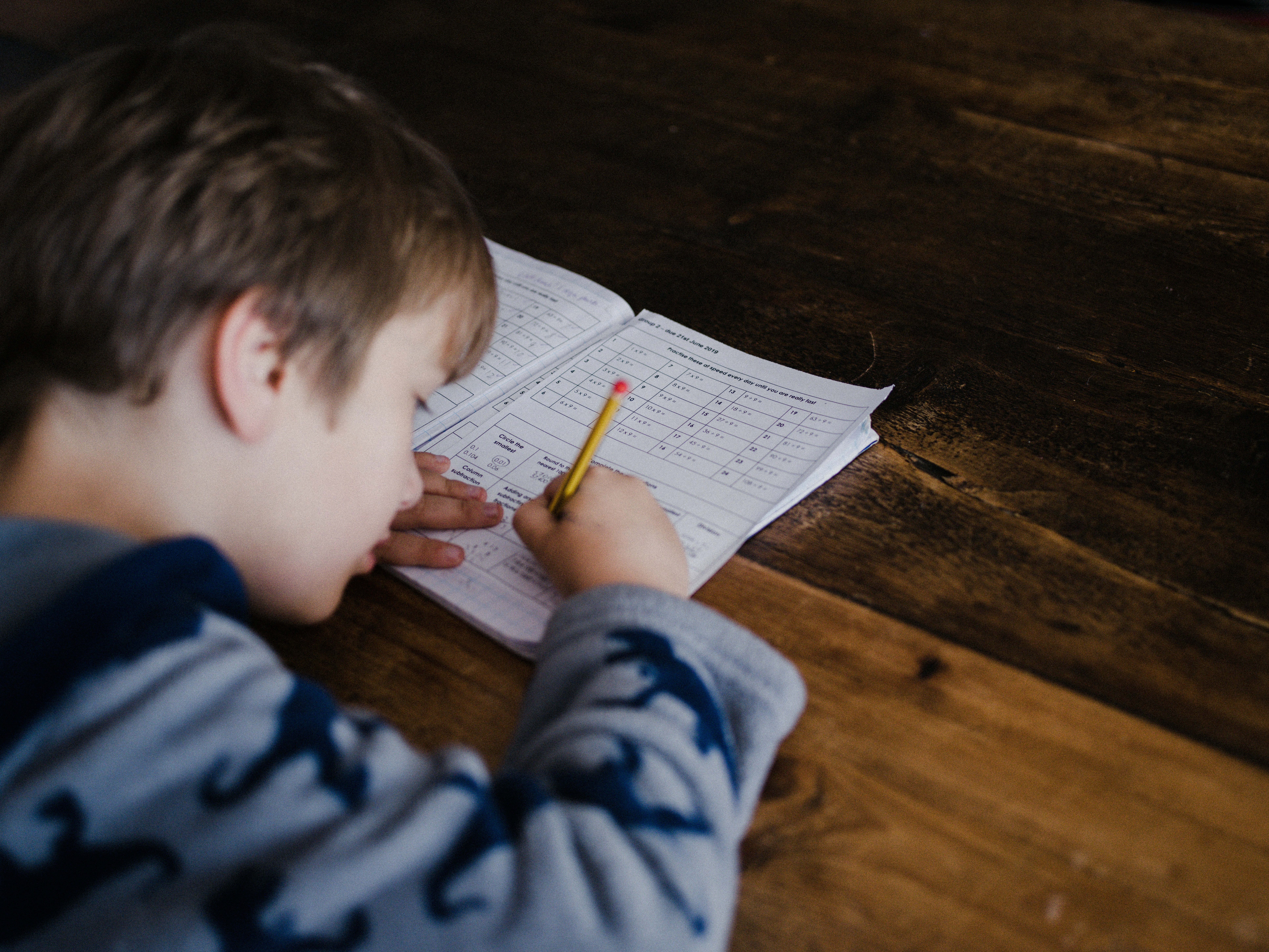
What usually works better is keeping it short and slightly structured:
- 10 minutes of work
- 5 minutes off
- Then one more 10-minute go (if you need it)
That break has to be a proper break too. Not “sit there and think about how you should be working”. More like: quick toilet trip, snack, drink, walk into the garden and back, a few star jumps… basically anything that lets their brain reset.
And if your child works better when you’re nearby, that’s not them being needy or “not independent enough”. Loads of ADHD kids concentrate better with someone in the room. You can sit рядом doing your own thing — emails, a cuppa, folding laundry — and it often keeps them anchored. The aim isn’t independence medals. The aim is to get it done without it turning into a fight.
Evenings and bedtime: keep it the same, even if the day wasn’t
By the time evening rolls around, everyone’s patience is hanging by a thread. That’s when routines need to get simpler, not more ambitious.
Bedtime tends to go smoother when it’s always the same order. Not because you’re trying to run the house like a boot camp, but because predictability helps an ADHD brain switch off.

A simple order that works for a lot of families is:
wash/bath → pyjamas → teeth → story → lights out
And if your child suddenly becomes a chatterbox the moment the lights go dim — yep, very normal. For some children, bedtime is the first quiet moment of the day, so their brains finally start processing everything. If that’s your child, try keeping a little notebook by the bed. They can write or draw whatever’s buzzing around in their head, close it, and you can say something like, “Right, it’s safe in the book now — we’ll deal with it tomorrow.”
And what about the days when it all goes wrong?
They’ll happen. Guaranteed. You can be organised, calm, up early, everything laid out… and still end up with one of those mornings where the socks disappear into another dimension, someone spills cereal everywhere, the PE kit apparently never existed, and you all leave the house feeling like you’ve already done a full day.
On those mornings, the best thing you can do is lower the bar on purpose.
Forget perfect. Aim for the basics:
- everyone eats something
- you get out the door (if you need to)
- you reset later, not mid-chaos
That’s the win.
If you need a sentence that helps without adding fuel to the fire, try:
“Rough morning. We’ll try again.”
No lecture. No replaying every detail. No “why can’t you just…”. Just draw a line under it and move on. Honestly, that alone can stop one rough morning from turning into a rough day.
If you want to start tomorrow, start tiny
Please don’t read all this and feel like you now need to redesign your whole family life by Monday. You don’t. Pick the one bit that causes the most stress and make that easier.
If you want a simple place to begin, try this tomorrow morning:
Clothes → teeth → breakfast → bag → shoes
That’s it. One step at a time, same words each day. Calm voice as best you can manage (and if it’s not calm, you’re still doing your best).